Fear of heights treatment in London

Feel free again, without fear of heights.

A therapist-guided, focused CBT treatment that helps your brain unlearn your fear – often within 2 sessions.

Book a free introductory call

Or call, Whatsapp or email one of our psychologists

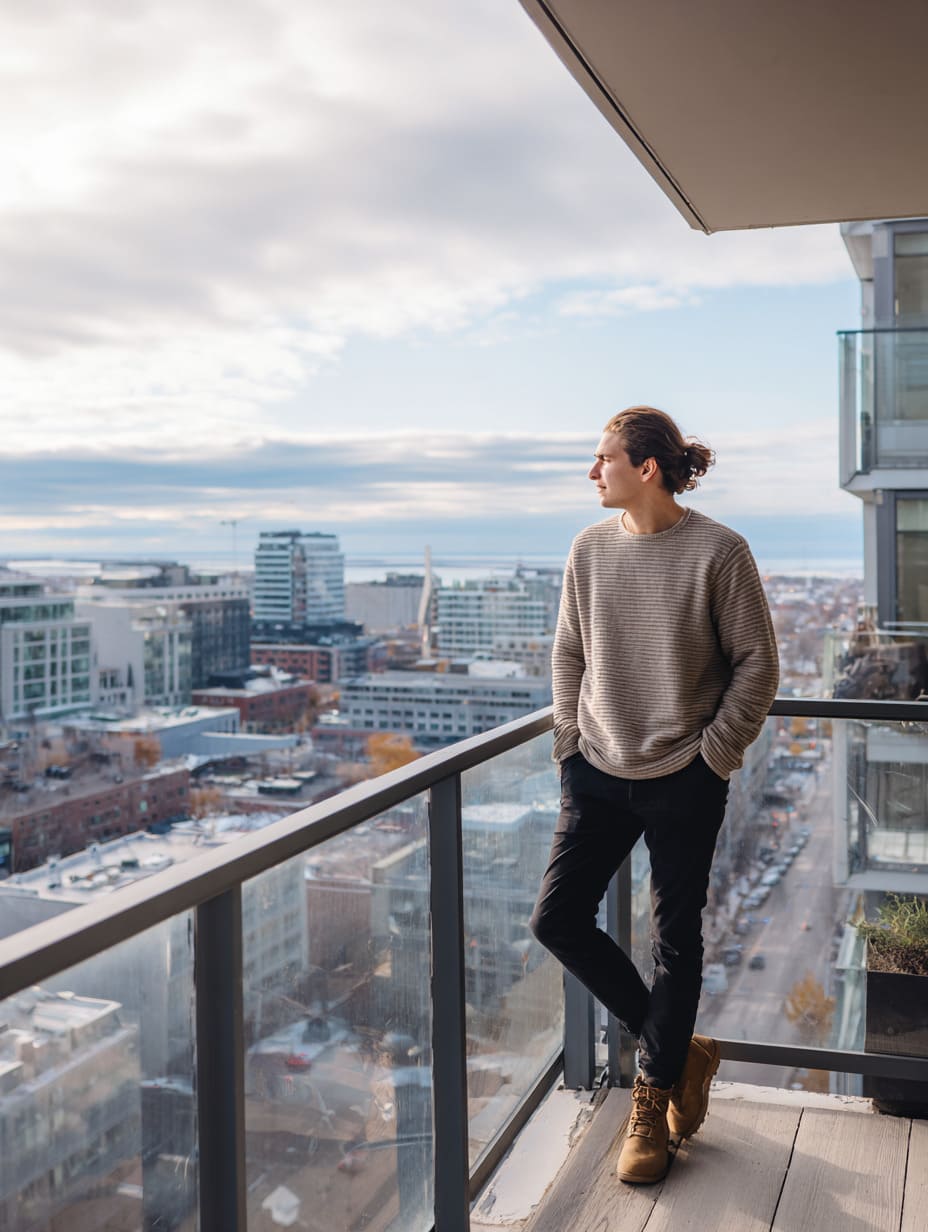
man relaxing on balcony without fear of heights

3,500+

patients treated

95%

SIGNIFICANT FEAR REDUCTION
in our clinic*

< 1 week

until first contact

* Results based on routine clinical data from 3,500+ patients treated since 2018. 82% remission, 13% clinically significant improvement at 2–5 month follow-up.

Our team

Our CLINIC

Do you recognise these symptoms of fear of heights?

the effect on your daily life

You avoid high places like balconies, ladders or viewpoints. When you are up high, you feel tense, unsteady, and focused on the risk of falling.
Common symptoms of fear of being at height:

Intense fear

Rapid heartbeat

Sweating

Shaky legs

Avoiding places

Urge to get down

WHAt’s happening in your brain

If you have a fear of heights, you probably know that balconies, bridges or staircases are usually safe. Yet your body can react with intense fear when you are in high places or even when you look down from a moderate height.

what we do about it

Our treatment targets the fear at its root — so the automatic reaction stops being triggered in the same way. Most patients notice the difference the very next day.

What people are able to do again after their acrophobia treatment

I avoided situations for years and kept adjusting my life around the fear. Now I just get on with things without thinking about it.

I can stand at a viewpoint and take a ski lift, and actually enjoy it

Paula’s experience at kindt clinics
“Through the Memrec treatment I was cured of my fear of heights in one day! I can still hardly believe it myself.”
“Over the past 45 years, I have denied myself (and my family) many enjoyable things because my fear of heights increasingly got in the way. To prevent anxiety and panic attacks, over the years I started avoiding more and more situations. In 2022 I decided I no longer wanted this. Via Google I discovered Kindt Clinics. The contact throughout the entire process — from the first phone call to the follow-up check by phone — was very pleasant. They took all the time needed to give explanations and answer questions. The treatment session itself was intense and demanding; a panic attack was deliberately triggered. But Sophie guided me through it wonderfully. I was very tired for the rest of the day. When the test took place, without feelings of panic, I climbed from the balcony onto the roof of the building using a kitchen step ladder. In the two weeks afterwards, in my private life I practised by consciously seeking out heights. The “highlight” was a glass balcony at 60 metres high that I simply dared to step onto. That had previously been completely unthinkable. I will probably never go skydiving or bungee jumping. But when I now look into a depth or drive on a mountain road, I can enjoy my surroundings without panic. At most I feel somewhat uncomfortable. This opens up a new world for me, and what previously was only a dream has now finally become possible: together with my husband I am going to visit the Grand Canyon.”
man standing on ladder without fear of heights

How the treatment for fear of heights works

Our Memrec approach builds on research by Prof. dr. Merel Kindt (University of Amsterdam), who discovered that adding a single dose of medication to a specific CBT-based approach can accelerate the process – enabling most phobias to be treated in just two sessions.

A psychologist guides you through the process from start to finish.

We plan 3 appointments

01
Online diagnostic assessment

Intake

We talk through your fear in depth – what it is, how it affects you, and what would help most. You leave with a clear picture and a treatment recommendation, whether that’s Memrec or something else.

02
at the clinic

Treatment session

At our clinic, a psychologist guides you through a single session designed around your specific fear. You then take a single dose of a beta blocker, which prevents the fear from being re-stored in the same way.

03
at the clinic

Test the effect

You return the next day. Most patients are surprised by what they notice – the automatic fear that was always there is much weaker or no longer there. Together we practise real-life situations to experience that for yourself.

If Memrec isn’t suitableWe find the right approach for youNot every treatment suits every person or every phobia. That’s why we offer different evidence-based approaches, including CBT and exposure therapy. During the intake, your psychologist will advise which option is likely to fit your situation best.

Built on 25 years of fear research

Phobias are learned, not something we are born with. They are irrational fears – intense, automatic, and treated by the brain as if the danger were real. Research published in Nature in 2000 showed that under specific conditions, these fear networks in the brain can become open to change.

Professor Merel Kindt translated this finding into clinical practice. Through her research at the University of Amsterdam, she developed Memrec – a specific form of CBT with the addition of a single medication to target the reconsolidation process.

Kindt Clinics is the first specialist clinic to apply this method outside of academic research. Featured in the Channel 4 documentary The Fear Clinic (2024).

Kindt, M., Soeter, M., & Vervliet, B. (2009). Beyond extinction: erasing human fear responses and preventing the return of fear. Nature Neuroscience, 12, 256–258.

Merel kindt is the founder of kindt clinics and the scientist behind the memrec method

Prof. dr. Merel Kindt
Founder of Kindt Clinics · Professor of Clinical Psychology, University of Amsterdam

Common questions.

What is acrophobia?

Fear of heights (acrophobia) is an intense fear of being in high places such as balconies, mountains, bridges or tall buildings. The fear can occur even when there is no real danger.

What is the best treatment for fear of heights?

Cognitive behavioural therapy (CBT) with exposure is the recommended treatment for fear of heights. In exposure therapy you practise step by step at increasing heights, such as stairs, balconies or viewpoints, guided by a psychologist; part of the treatment may also be done in virtual reality. A newer form of CBT is Memrec, developed at the University of Amsterdam. Memrec targets the fear memory itself: the fear is briefly activated once, after which you take a single dose of a beta blocker. During your assessment we discuss which approach suits you best.

Does Memrec work for all types of fear of heights?
Fear of heights can appear in many situations: on balconies, bridges, escalators, open staircases, glass lifts or rooftop terraces. Some people fear falling; others are more afraid of losing their balance, feeling dizzy or suddenly losing control near an edge and suddenly feeling an urge to jump. Some also become anxious when they see someone else standing high up. In most cases, both Memrec and gradual CBT are suitable. During the free introductory call, we ask which situations you find difficult and what you want to achieve with the treatment, so we can advise whether Memrec or gradual CBT is the better fit.
How many sessions does acrophobia treatment take?

That depends on the treatment. Every treatment starts with an online diagnostic assessment. With Memrec, you then usually need two sessions at our clinic, on consecutive days: the treatment session and a follow-up the next day to test the effect. Regular CBT or exposure therapy usually takes 3 to 8 sessions after the assessment. Before you start, you can book a free 15-minute call with one of our psychologists.

Why is a beta blocker used in Memrec and is it safe?

The beta blocker is a widely used medication that normally temporarily reduces the physical stress response. It is taken as a single dose and does not cause sedation. Your psychologist will discuss any contraindications during the assessment.

How much does fear of being at height treatment cost?

The complete Memrec programme costs £1,595. We also offer exposure therapy and one-to-one consultations or CBT, online or hybrid, starting from £250 per session. The introductory call is free.

Where is Kindt Clinics located?

Our London clinic is at 22 Wimpole Street, London W1G 8GQ, in the Harley Street Health District. We also have a clinic in Amsterdam, at Karel du Jardinstraat 33-4, 1072 SG Amsterdam. Memrec treatment takes place on two consecutive days, so patients travelling from further away often plan a short stay of two days.
What if I'm not sure if I'm ready for phobia treatment?
That’s completely normal. The free introductory call is designed exactly for this — just a conversation. Our psychologists are used to helping people think through whether and when treatment feels right for them.
Is fear of heights the same as vertigo?

No. Vertigo usually refers to a sensation that you or your surroundings are spinning or moving. It can have several medical causes, including problems with the inner ear. Fear of heights, or acrophobia, is an anxiety response to being high up, which can itself cause dizziness or unsteadiness. The two can overlap, so it is worth looking at when your symptoms occur. If you also feel dizzy at ground level, or when turning your head, discuss it with your GP. If the dizziness occurs mainly in frightening height situations, we can explore whether treatment for the fear is suitable.

Why do I feel an urge to jump when I am high up?

Some people experience a sudden thought or sensation of jumping when standing near a height, even though they have no wish to jump. This is sometimes called the ‘call of the void’. It is a type of intrusive thought: unwanted, but very common. One explanation is that your body makes you step back from the edge before you are aware of the danger, and your mind then interprets that reaction as an urge to jump. Feeling an urge is not the same as acting on it. The thought becomes a problem when people take it as a warning sign and start avoiding heights because of it. If that sounds familiar, mention it during your assessment. If you actually want to jump or fear you might act on the thought, seek urgent support.
Book your free 15-minute call

Choose a time that suits you. You speak with one of our psychologists about your fear, ask your questions and hear whether the treatment suits you. No obligation.

Ready to take the first step?

Speak directly to one of the psychologists in our London clinic.